 Abacalist

 Português
Saving at the grocery store doesn't take coupons or driving all over town chasing deals. What adds up at checkout are the small decisions in the aisle: the package that seemed necessary, the brand at eye level, the snack that went in because you were hungry.
01Make your list before you go
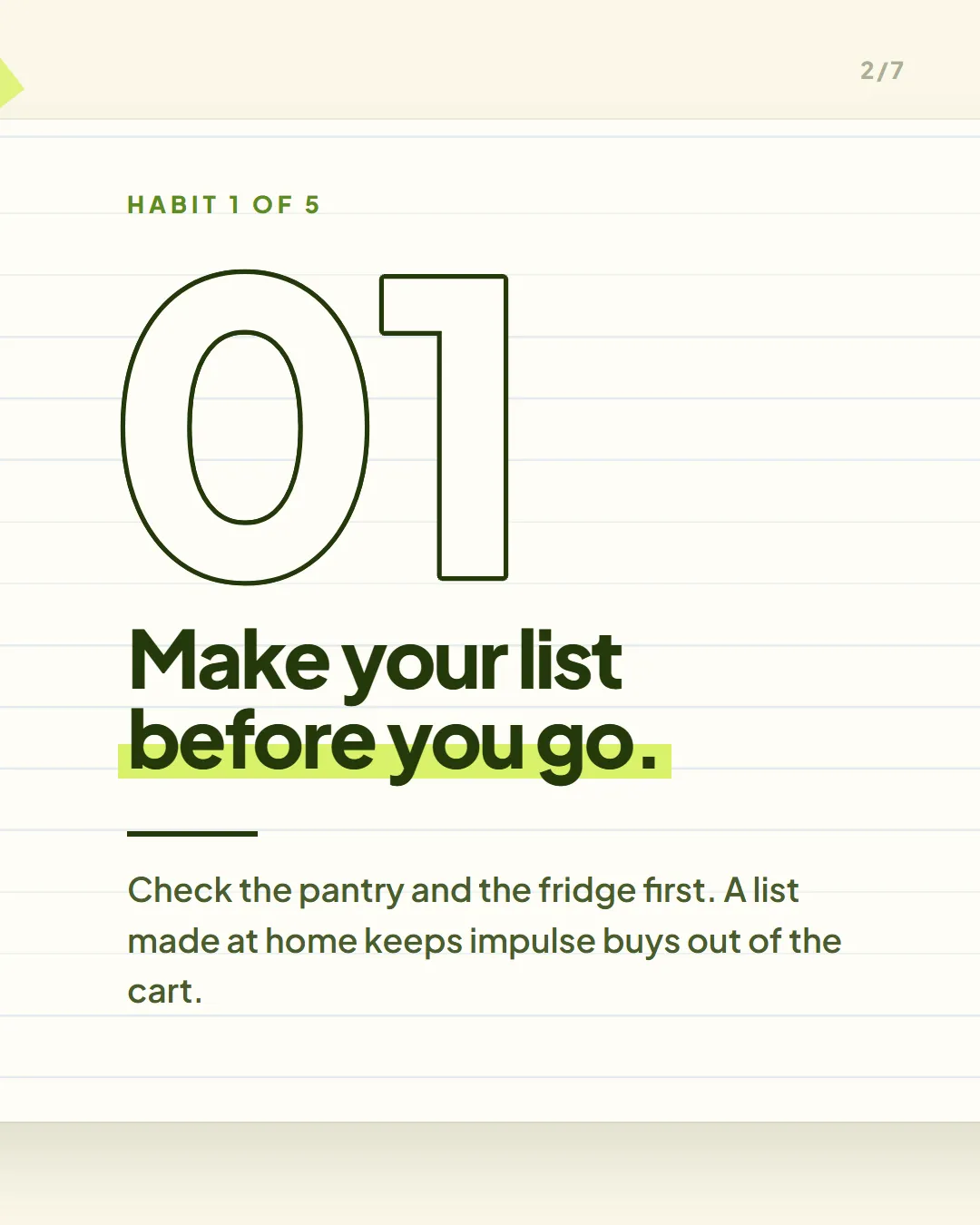
You decide, not the aisle.
Without a list, what to buy gets decided in the aisle, exactly where everything is designed to catch your eye. Making it at home, looking through the cupboards, you won't buy a third bag of rice or forget the dish soap that ran out yesterday.
In practice
- Write down what's running low, not just what's gone
- Plan the week's meals around what's in the fridge
- Sort the list by store section: you'll walk less
02Decide how much you'll spend
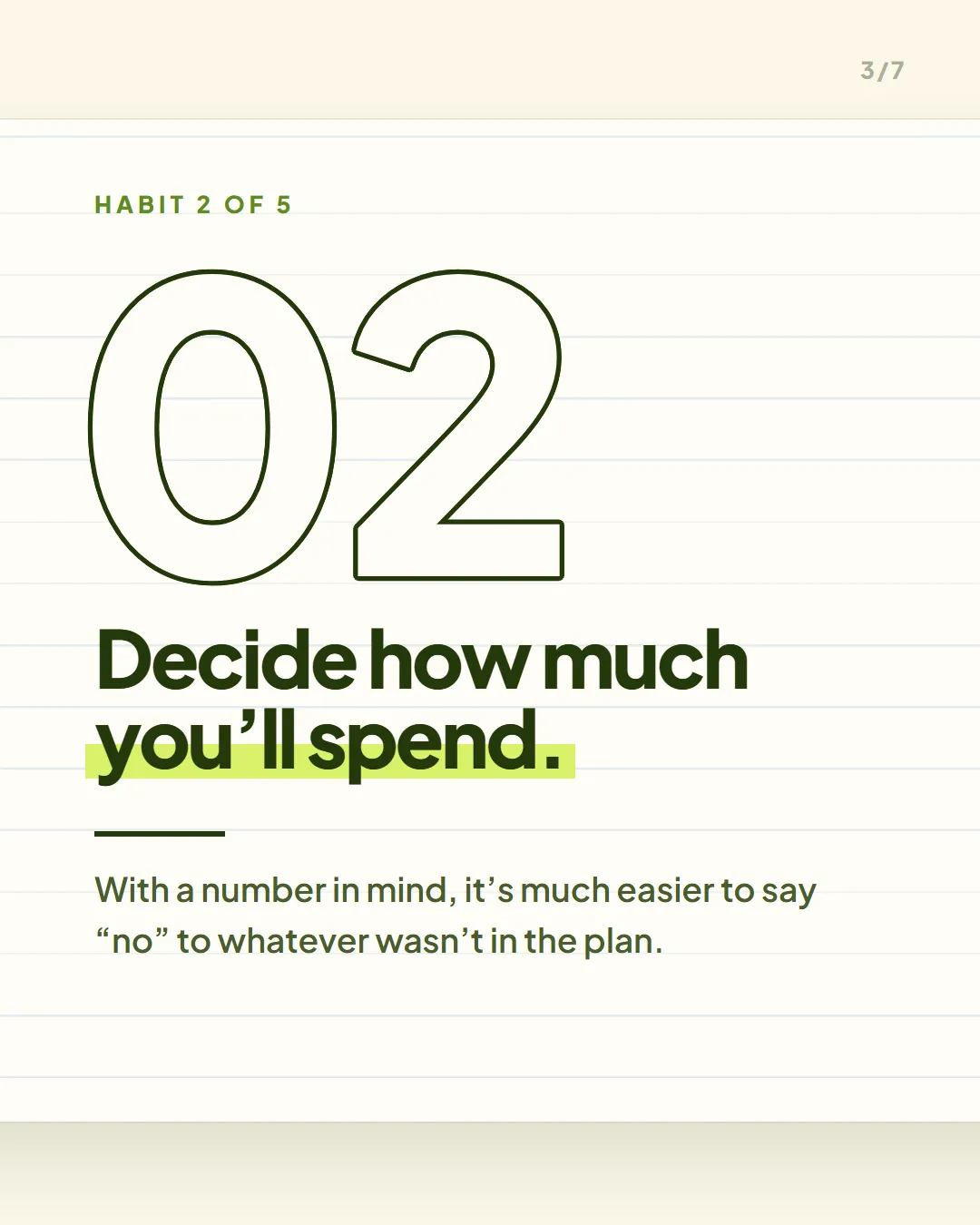
A number that says "no" for you.
A set amount changes the way you shop: every item has to compete for room with the others, and whatever wasn't in the plan loses its turn without much debate.
In practice
- Use what you spent on your last trips as a starting point
- Put the essentials in the cart first
- Keep track of the total as you shop, item by item
03Look up and down
Your hand reaches eye level first.
That's usually where the best-known brands are. The top and bottom shelves hold cheaper options, often of similar quality.
In practice
- Look at the whole shelf before grabbing the first product
- Try store brands for the basics
- An end-of-aisle display doesn't mean it's on sale
04Compare the unit price
The big price on the tag doesn't tell the whole story.
Sometimes the smaller package costs less per ounce than the bigger one, and a "buy 3, pay for 2" deal can end up more expensive per unit. The unit price, in smaller print, tells the whole story.
In practice
- Always compare in the same unit
- For toilet paper, check the price per roll and the size of the roll
- Only buy the bigger size if you'll use it all before it goes bad
05Don't shop hungry
Hunger is what fills the cart.
Cookies, chips, the frozen pizza "to make things easier": when you're hungry, things go into the cart that hardly would after a meal.
In practice
- Eat something before you go, even if it's just a piece of fruit
- Go after lunch or dinner
- With kids, agree beforehand on what can go in the cart